
The Connection Between Chronic Basement Dampness and Indoor Air Quality in Granville
Chronic basement dampness in Granville homes creates a direct pathway for poor indoor air quality that affects your family’s health. Moisture from clay-heavy soil and Lake Michigan’s humid influence seeps through older foundation walls, releasing mold spores and musty odors that rise through the stack effect into living spaces. Studies show that up to 50% of the air you breathe on the first floor originates from the basement, making dampness not just a structural concern but a respiratory health issue. When you notice persistent humidity, white powdery efflorescence, or that unmistakable musty smell, your basement is actively compromising the air quality throughout your home.
How Moisture Creates a Health Hazard in Your Basement
Moisture in your basement provides the perfect breeding ground for mold, dust mites, and bacteria that degrade indoor air quality. When relative humidity exceeds 60%, mold species like Stachybotrys and Aspergillus begin colonizing damp surfaces, releasing microscopic spores that travel upward through your home. These spores trigger asthma attacks, allergic reactions, and respiratory infections, particularly in children and elderly residents. The problem compounds when moisture activates existing allergens in stored items or building materials, creating a concentrated zone of airborne irritants directly beneath your living space.
Beyond biological contaminants, damp basements concentrate volatile organic compounds (VOCs) from paints, adhesives, and cleaning products. Water-damaged materials release formaldehyde and other harmful gases at accelerated rates in humid conditions. The stack effect, where warm air rises and pulls cooler basement air upward, ensures these concentrated pollutants reach your bedrooms and living areas within hours. Without proper moisture control, your basement becomes an invisible source of chronic air quality problems that affect every room above it. Emergency Water Removal Services for Bay View Homeowners and Business Owners.
Milwaukee’s Climate Creates Unique Basement Moisture Challenges
Granville’s location in northwest Milwaukee places homes directly in the path of Lake Michigan’s moisture-laden air masses. The area experiences 34 inches of annual precipitation, with spring thaws and summer thunderstorms pushing clay soil to saturation levels that hydrostatic pressure forces through foundation walls. Freeze-thaw cycles common to Wisconsin winters create foundation cracks that widen each season, providing new entry points for groundwater. The clay soil prevalent in Milwaukee County expands when wet and contracts when dry, creating a constant cycle of pressure against basement walls that leads to seepage and structural stress. EPA mold information.
Historic Granville homes, many built between the 1920s and 1950s, feature fieldstone or concrete block foundations that were not designed for today’s moisture loads. These older materials absorb water readily and lack modern vapor barriers or drainage systems. The combination of aging infrastructure and aggressive local weather patterns means Granville basements face moisture intrusion that newer construction in other regions might never experience. Understanding these local factors is crucial because generic moisture control advice often fails to address the specific challenges that Milwaukee’s climate and soil conditions create. Restoring Water Damaged Offices and Lofts in the Historic Third Ward.
Warning Signs Your Basement Air Quality Is Compromised
Recognizing the early warning signs of basement moisture problems can prevent serious air quality issues from developing. Musty odors are often the first indicator, caused by microbial volatile organic compounds (MVOCs) released by active mold colonies. White powdery efflorescence on foundation walls signals water-soluble salts being drawn to the surface by moisture, indicating ongoing water intrusion even if no standing water is visible. Peeling paint, warped wood trim, or rusting metal fixtures near floor level all indicate sustained humidity levels above 55%. Signs of Hidden Mold.
Health symptoms in your household can also signal basement air quality problems. Increased frequency of allergy symptoms, unexplained respiratory irritation, or persistent coughing that improves when away from home suggests airborne contaminants are present. Condensation on windows, especially in finished basement areas, indicates humidity levels high enough to support mold growth. If you notice any combination of these signs, your basement is likely releasing compromised air into your living spaces, and professional assessment becomes necessary to protect your family’s health. Professional Mold Remediation for Families in Mequon and Thiensville.
Technical Solutions for Lasting Air Quality Improvement
Effective basement moisture control requires addressing both the source of water intrusion and the resulting air quality issues. Professional-grade dehumidification systems maintain relative humidity between 30-50%, the optimal range for preventing mold growth while remaining comfortable for occupants. Industrial-strength units differ significantly from retail models, removing 70-100 pints of water daily compared to 30-50 pints from consumer units. These systems include automatic drainage, washable filters, and humidistat controls that maintain consistent conditions year-round.. Read more about Water Damage Response for Senior Living Communities and Assisted Care Facilities in Hales Corners.
Foundation waterproofing represents the next level of protection, involving exterior excavation, drainage board installation, and waterproof membrane application according to Wisconsin Uniform Dwelling Code requirements. Interior solutions include perimeter drainage systems that channel water to sump pumps with battery backup systems capable of operating during power outages common during Milwaukee storms. HEPA air scrubbers with activated carbon filters remove 99.97% of airborne particles as small as 0.3 microns, including mold spores, dust mite debris, and VOC molecules. For homes with radon concerns, sub-slab depressurization systems prevent soil gases from entering through the same pathways moisture uses.. Read more about Common signs of water damage in South Milwaukee ranch homes (The asbestos tile warning).
When Professional Water Damage Restoration Becomes Essential
Certain moisture conditions require immediate professional intervention to prevent escalating health and structural damage. Active water intrusion through foundation walls, regardless of volume, indicates a failure in your home’s moisture management system that will worsen without expert repair. Mold covering more than 10 square feet requires professional remediation according to IICRC S520 standards, as improper cleaning can release millions of additional spores into your home. Sewage backups or flooding from contaminated sources introduce bacteria and pathogens that require specialized cleaning agents and protective equipment beyond homeowner capabilities. Reliable Sewage Cleanup and Sanitization in West Allis.
Professional restoration becomes critical when moisture has affected building materials beyond simple surface dampness. Waterlogged drywall, insulation, or carpeting provides ideal conditions for hidden mold growth within wall cavities and under flooring. The presence of Stachybotrys chartarum, commonly known as black mold, requires specific containment procedures to prevent cross-contamination during removal. If your basement has experienced flooding within the past 48-72 hours, professional water extraction and structural drying can prevent secondary damage that would otherwise develop over the following weeks. The cost of professional intervention typically ranges from $2,000 to $10,000 depending on the extent of damage and required remediation, but prevents exponentially higher costs from structural deterioration and health complications.
Prevention Strategies for Granville Homeowners
Preventing basement moisture problems requires a systematic approach that addresses both external and internal factors. Exterior grading should slope away from your foundation at a minimum of 6 inches over 10 feet, directing rainwater away from basement walls. Extend downspouts at least 6 feet from your foundation using underground drain pipes or splash blocks, ensuring they remain clear of debris that could cause backups. Inspect and clean gutters twice yearly, particularly after Milwaukee’s autumn leaf fall when clogs commonly occur.
Interior prevention focuses on maintaining proper humidity levels and early problem detection. Install a hygrometer to monitor basement humidity, aiming to keep levels between 30-50%. Run dehumidifiers continuously during summer months when outdoor humidity exceeds indoor levels. Inspect your foundation quarterly for new cracks or signs of seepage, particularly after spring thaws or heavy rainfall events. Test your sump pump monthly by pouring water into the pit to verify automatic activation. Consider installing a water alarm system that alerts you to the first signs of flooding, providing critical response time before extensive damage occurs.
The Cost of Inaction: Health and Property Risks
Ignoring chronic basement dampness creates escalating costs that extend far beyond the initial moisture problem. Health-related expenses from prolonged mold exposure include increased medical visits, prescription medications for respiratory conditions, and potential long-term complications for family members with compromised immune systems. Property devaluation represents another significant cost, as moisture damage and mold remediation history can reduce home values by 10-25% in severe cases. Insurance complications arise when claims are denied due to neglected maintenance, leaving homeowners responsible for tens of thousands in repair costs.
Structural deterioration accelerates when moisture problems persist. Water-damaged wood framing loses up to 60% of its strength, compromising load-bearing capacity and creating safety hazards. Foundation movement from soil expansion and contraction leads to uneven settling, causing cracks in walls, sticking doors and windows, and eventual structural failure requiring foundation repair costing $10,000 to $30,000 or more. The compounding nature of moisture damage means that what begins as a $500 dehumidifier investment can escalate to a $50,000 restoration project within three to five years if left unaddressed.
Professional Assessment: What to Expect
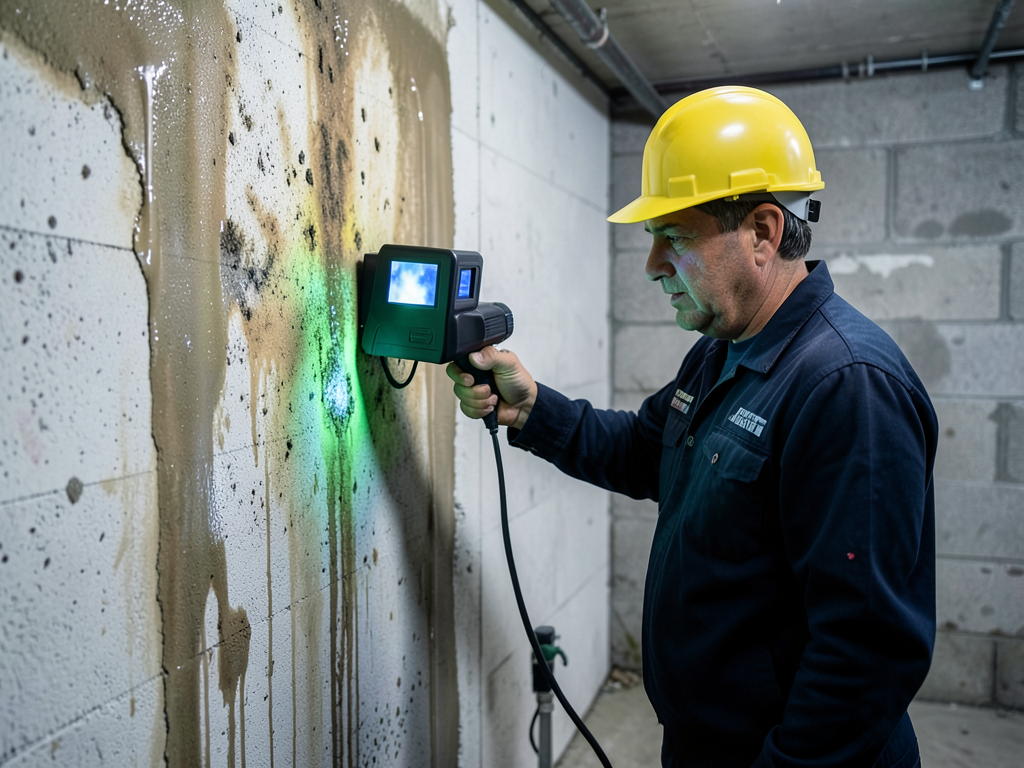
A comprehensive basement moisture assessment follows a systematic diagnostic process that identifies both obvious and hidden problems. Technicians begin with a visual inspection, documenting moisture patterns, efflorescence locations, and structural cracks using moisture meters to quantify water content in various materials. Infrared thermal imaging cameras reveal temperature differentials that indicate hidden moisture within walls and behind finished surfaces, creating a complete moisture map of your basement. Air quality testing measures spore counts, VOC levels, and humidity to establish baseline conditions and identify specific contaminants requiring remediation.
The assessment process includes evaluating your home’s drainage systems, foundation condition, and mechanical equipment. Sump pump capacity is tested against local precipitation patterns to ensure adequate performance during severe storms. Foundation wall thickness and condition are measured to determine appropriate repair methods, whether crack injection, exterior waterproofing, or complete wall replacement becomes necessary. The final report provides a prioritized remediation plan with estimated costs, timeline expectations, and recommendations for preventing future moisture intrusion. This professional evaluation eliminates guesswork and ensures that remediation efforts address the actual sources of your basement’s air quality problems rather than just treating symptoms.
Take Control of Your Home’s Air Quality Today
Chronic basement dampness in Granville homes creates an invisible threat to your family’s health that worsens with each passing season. The combination of Lake Michigan’s humidity, clay soil expansion, and aging foundations creates conditions that generic moisture control advice cannot address. Your basement’s air quality directly impacts every room above it through the stack effect, making professional assessment and remediation not just a property improvement but a health necessity. The signs are often subtle at first – a musty smell here, slightly increased allergy symptoms there – but these early warnings indicate a problem that will only escalate without intervention.
Professional water damage restoration specialists understand Granville’s specific moisture challenges and provide solutions that address both immediate problems and long-term prevention. From industrial-grade dehumidification to foundation waterproofing that meets Wisconsin building codes, comprehensive remediation restores both your basement’s structural integrity and your home’s indoor air quality. Don’t wait for visible water damage or severe health symptoms to take action. The cost of prevention is always lower than the expense of repairing structural damage and addressing health complications that develop over time. Your family deserves to breathe clean, healthy air in every room of your home.
Frequently Asked Questions
How does basement moisture affect the air quality upstairs?
Basement moisture creates airborne contaminants like mold spores and VOCs that rise through the stack effect, where warm air pulls cooler basement air upward through your home. Studies indicate that up to 50% of the air on your first floor originates from the basement, meaning dampness and contaminants below directly impact the air quality throughout your living spaces.
What humidity level should I maintain in my basement?
Maintain relative humidity between 30-50% in your basement to prevent mold growth while remaining comfortable. Levels above 60% create conditions where mold species like Stachybotrys and Aspergillus begin colonizing damp surfaces. Use a hygrometer to monitor levels and run a dehumidifier continuously during humid months to maintain optimal conditions.
How can I tell if I have a moisture problem if I don’t see water?
Look for warning signs like musty odors, white powdery efflorescence on walls, peeling paint near floor level, condensation on windows, or increased allergy symptoms in household members. These indicators suggest humidity levels above 55% that support mold growth even without visible standing water. Professional moisture meters can detect hidden dampness within walls and concrete.
Is mold in my basement dangerous to my health?
Yes, basement mold releases spores and microbial volatile organic compounds that can trigger asthma attacks, allergic reactions, and respiratory infections. Species like Stachybotrys chartarum produce mycotoxins that may cause more severe health effects, particularly in children, elderly individuals, and those with compromised immune systems. The confined basement environment allows spore concentrations to build to levels that affect air quality throughout your home.
How much does professional basement moisture remediation cost?
Professional remediation costs typically range from $2,000 to $10,000 depending on the extent of damage and required solutions. Simple dehumidification and minor repairs might cost $1,500 to $3,000, while comprehensive foundation waterproofing and mold remediation can exceed $15,000. The investment prevents exponentially higher costs from structural damage and health complications that develop when moisture problems persist untreated. For more information, visit CDC mold facts.
Take Action Before Your Basement Air Quality Worsens
Chronic basement dampness creates an escalating health risk that affects every room in your Granville home. The musty odors, increased allergy symptoms, and visible moisture signs indicate a problem that will only worsen without professional intervention. Don’t let another season pass while your family breathes contaminated air rising from below. Professional water damage restoration specialists understand Granville’s unique moisture challenges and provide comprehensive solutions that address both immediate problems and long-term prevention. Call (414) 392-1771 today to schedule your basement assessment and take the first step toward clean, healthy indoor air throughout your entire home. The longer you wait, the more expensive and extensive the remediation becomes.