
How to Clean Up After a Commercial Beverage Line Leak in a Milwaukee Bar or Brewery
A beverage line leak in a Milwaukee bar or brewery creates an immediate crisis that threatens both your inventory and your reputation. The sticky residue from beer, wine, or soda lines combined with the high humidity of brewing environments creates perfect conditions for microbial growth within hours. You need to act fast to protect your equipment, prevent contamination, and get back to serving customers.
Commercial beverage line leaks differ from standard water damage because they involve organic matter, sugars, and acids that can corrode stainless steel and create slip hazards. The cleanup process requires food-grade sanitization protocols that meet both health department standards and your insurance requirements. This guide walks you through the essential steps to handle a beverage line emergency in your Milwaukee establishment. EPA emergency disinfection guidelines.
Immediate Actions When You Discover a Beverage Line Leak
Your first priority is stopping the leak and protecting your product. Locate the main shutoff valve for your beverage system and close it immediately. If you cannot find the source, turn off the main water supply to prevent further flooding. Document everything with photos before moving any equipment or starting cleanup. Emergency Water Removal Services for Bay View Homeowners and Business Owners.
Remove any exposed food products, open containers, or raw ingredients from the affected area. Beverage spills create slippery surfaces that pose serious safety risks to your staff and customers. Place warning signs and restrict access to the contaminated zone until professionals arrive. Professional Mold Remediation for Families in Mequon and Thiensville.
Time matters more than anything else. The longer organic matter sits on surfaces, the more likely you are to face mold growth, equipment corrosion, and health code violations. Milwaukee’s high summer humidity accelerates these problems dramatically.
Understanding the Unique Risks of Beverage Line Damage
Beverage line leaks introduce several hazards that standard water damage restoration does not address. Beer lines contain yeast and sugars that feed mold growth. Glycol cooling systems can leak toxic antifreeze that requires specialized handling. Wine lines leave acidic residues that etch stainless steel if not neutralized properly. Restoring Water Damaged Offices and Lofts in the Historic Third Ward.
The fermentation environment in breweries creates additional challenges. High humidity levels and warm temperatures in production areas mean that standing water from a leak can cause mold to establish within 24 to 48 hours. This timeline is much shorter than in standard commercial buildings.
Milwaukee’s brewing heritage means many establishments have complex glycol cooling systems for draft beer. These systems run at low temperatures and can create condensation issues when they fail. The combination of cold lines and warm ambient air produces moisture that spreads damage beyond the initial leak point.
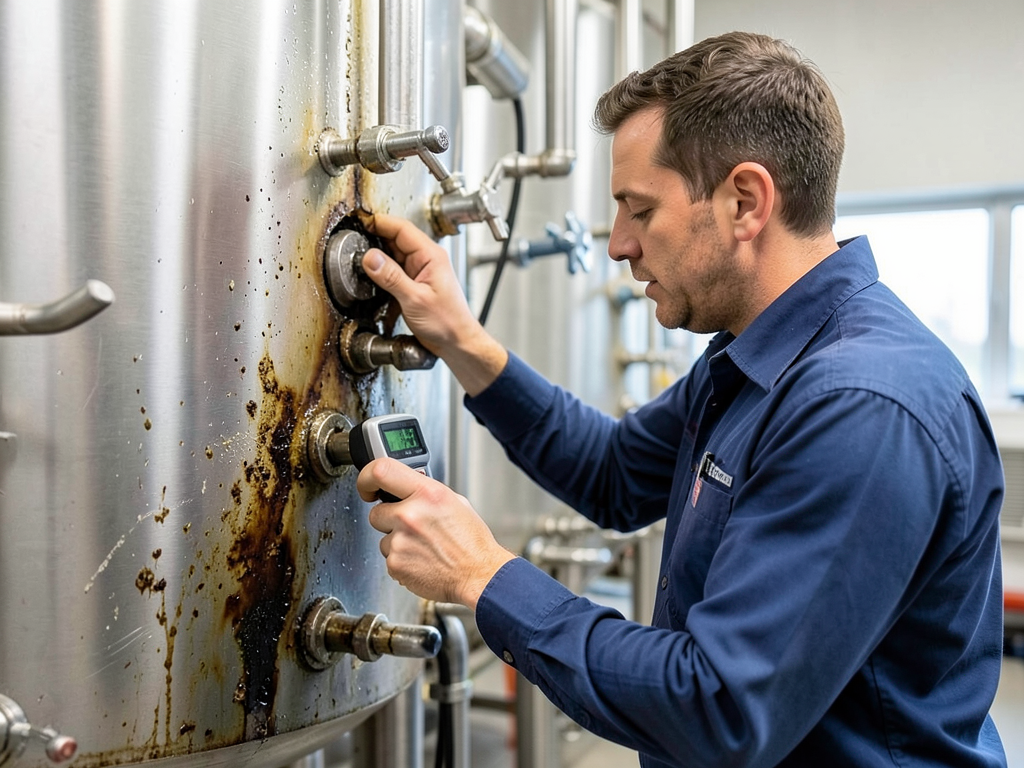
Photo showing a technician using a moisture meter to detect hidden moisture behind brewery equipment after a beverage line leak.
Health and Safety Compliance Requirements
Milwaukee Health Department regulations require specific sanitization protocols after any beverage contamination. You must use EPA-registered food-contact sanitizers that meet FDA guidelines for breweries and bars. Standard cleaning products are not sufficient for food-grade environments.
The Wisconsin Department of Agriculture, Trade and Consumer Protection (DATCP) has strict requirements for breweries that experience water damage. You may need to discard exposed product, sanitize all contact surfaces, and document your cleanup procedures before resuming operations.
OSHA mandates that employees handling chemical sanitizers receive proper training and personal protective equipment. This includes gloves, eye protection, and respiratory protection when dealing with certain cleaning agents. Failure to follow these protocols can result in fines and liability issues. OSHA emergency preparedness standards.
Insurance companies often require specific documentation for beverage line claims. You need to show that you followed proper protocols, used approved cleaning agents, and disposed of contaminated materials according to local regulations. This documentation protects your business from liability and ensures coverage.
Professional Equipment and Techniques for Beverage Line Cleanup
Professional restoration teams use specialized equipment designed for food-grade environments. High-efficiency particulate air (HEPA) filtration systems remove airborne contaminants while maintaining sterile conditions. Industrial-grade dehumidifiers with food-safe materials prevent secondary damage without introducing chemicals into your production area.
Moisture mapping technology helps identify hidden damage behind walls and under flooring. Infrared cameras detect temperature variations that indicate moisture presence, while penetrating moisture meters measure water content in wood, concrete, and stainless steel surfaces. Signs of Hidden Mold.
Professional teams use food-grade antimicrobial treatments that are safe for brewing environments. These products kill bacteria and mold without leaving residues that could affect your product quality. They also understand how to properly neutralize acidic wine or beer residues that could damage your equipment.
The restoration process includes passivation of stainless steel surfaces that contact beverages. This chemical treatment restores the protective oxide layer on stainless steel, preventing corrosion and maintaining the sanitary properties of your brewing equipment.
Step-by-Step Beverage Line Leak Cleanup Process
- Emergency Containment
Shut off the beverage supply, contain the spill with barriers, and remove all exposed product from the area. Document the damage with photos for insurance purposes.
- Water Extraction
Use industrial wet vacuums and pumps to remove standing liquid. Pay special attention to areas under equipment where moisture can hide.
- Surface Cleaning
Clean all affected surfaces with food-grade cleaners that remove organic residues without leaving harmful chemicals behind.
- Sanitization
Apply EPA-registered food-contact sanitizers according to manufacturer specifications and health department requirements.
- Drying and Dehumidification
Install commercial dehumidifiers and air movers to remove moisture from the air and materials. Monitor humidity levels continuously.
- Final Inspection
Test all cleaned surfaces with ATP meters to verify sanitization levels meet food safety standards.
Preventing Future Beverage Line Leaks
Regular maintenance prevents most beverage line emergencies. Schedule quarterly inspections of all beverage lines, connections, and cooling systems. Look for signs of wear, corrosion, or loose fittings that could lead to leaks.
Install water detection sensors near high-risk areas like keg storage, draft beer towers, and glycol cooling units. These sensors alert you to leaks before they cause major damage, allowing you to shut off systems quickly.
Train your staff to recognize early warning signs of beverage line problems. This includes unusual noises from pumps, temperature fluctuations in cooling systems, and visible moisture around connections. Quick action by trained staff can prevent minor issues from becoming major emergencies.
Consider upgrading older beverage lines to modern materials that resist corrosion and have better leak detection capabilities. While this requires upfront investment, it can prevent costly damage and business interruption in the future.
Insurance and Business Continuity Considerations
Most commercial insurance policies cover beverage line damage, but coverage details vary significantly. Review your policy to understand what is covered, including equipment damage, inventory loss, and business interruption. Document everything thoroughly to support your claim.
Business interruption insurance becomes critical when beverage line leaks force you to close temporarily. This coverage helps pay for lost revenue, ongoing expenses, and temporary relocation costs while you restore your facility.
Work with restoration professionals who understand the brewing and bar industry. They can help you document damage, communicate with insurance adjusters, and develop a recovery plan that gets you back to serving customers as quickly as possible.
Keep a list of emergency contacts, including your restoration company, equipment repair specialists, and insurance agent. Having these numbers readily available can save valuable time when a leak occurs.
Local Resources and Support in Milwaukee
Milwaukee’s brewing community offers unique resources for establishments dealing with beverage line emergencies. The Milwaukee Brewers Guild provides networking opportunities and can connect you with experienced professionals who understand local regulations and industry standards. Dealing with a Flooded Basement in Wauwatosa (Your Emergency Action Plan).
Local suppliers like Wisconsin Brewing Company and Lakefront Brewery often have emergency response teams that can help with specialized equipment issues. They understand the unique challenges of Milwaukee’s brewing environment and can provide rapid support.
The Milwaukee Health Department offers guidance on food safety compliance after water damage. They can help you understand what documentation you need and what inspections you must pass before reopening.
Professional associations like the Brewers Association provide resources and best practices for emergency response in brewing environments. These resources can help you develop your own emergency response plan before problems occur.
Cost Factors and Budgeting for Beverage Line Cleanup
The cost of beverage line cleanup varies based on several factors. The extent of damage, type of beverage involved, and size of your facility all affect the final price. Simple cleanups might cost a few hundred dollars, while major incidents involving glycol systems could run several thousand.
Equipment replacement represents a significant cost factor. Stainless steel brewing equipment damaged by acidic beverages or improper cleaning may need professional restoration or replacement. Glycol cooling systems require specialized handling that adds to cleanup costs.
Business interruption represents the largest hidden cost of beverage line leaks. Every hour your doors remain closed costs you revenue and damages your reputation. Quick professional response minimizes these losses.
Preventive maintenance costs less than emergency cleanup. Investing in regular inspections, water detection systems, and staff training can prevent most major incidents and save you money in the long run.
Frequently Asked Questions
How quickly should I respond to a beverage line leak?
Immediate response is critical. You should shut off the system within minutes of discovering a leak and begin containment procedures. Professional restoration teams should arrive within 60 minutes for emergency service in Milwaukee.
Can I clean up a beverage line leak myself?
Small spills might be manageable with proper cleaning supplies, but most beverage line leaks require professional equipment and sanitization. DIY cleanup often misses hidden moisture and fails to meet health department standards.
What makes beverage line cleanup different from water damage restoration?
Beverage line cleanup involves organic matter, sugars, and acids that require food-grade sanitization. Standard water damage restoration does not address these contaminants or the specialized equipment used in brewing and bar environments.
How long does professional beverage line cleanup take?
Most cleanups take 24 to 72 hours depending on the extent of damage. This includes water extraction, cleaning, sanitization, drying, and final testing to ensure all surfaces meet food safety standards.
Will my insurance cover beverage line damage?
Most commercial policies cover beverage line damage, but coverage varies. Review your policy and work with restoration professionals who can help document damage and communicate with insurance adjusters.
Emergency Response Available Now
When a beverage line leak threatens your Milwaukee bar or brewery, every minute counts. Our team specializes in rapid response for commercial beverage emergencies, with technicians trained in food-grade sanitization and brewing equipment protection. We understand the unique challenges of Milwaukee’s brewing environment and can get your doors open faster while ensuring compliance with all health regulations.
Don’t let a beverage line leak ruin your reputation or your equipment. Call (414) 392-1771 now for 24/7 emergency service. Our professionals will arrive within 60 minutes to contain the damage, protect your product, and begin the restoration process. We work directly with your insurance company and health department to minimize downtime and get you back to serving customers quickly.
Pick up the phone and call (414) 392-1771 before the next storm hits or the next line fails. Your business deserves expert care from professionals who understand Milwaukee’s brewing heritage and the importance of getting back to normal operations as quickly as possible.