
How to Protect Your Original Built-In Woodwork in Washington Heights After a Pipe Leak
Water from a burst pipe can destroy the irreplaceable built-in cabinetry that defines many Washington Heights homes. Solid wood built-ins absorb moisture quickly causing swelling warping and delamination of veneers. The first 24 hours determine whether your woodwork survives or becomes a mold breeding ground. You need to act fast with the right tools and knowledge. Emergency Water Removal Services for Bay View Homeowners and Business Owners.
Immediate Steps: What to Do in the First 24 Hours
Turn off the water supply at the main valve. Remove standing water using towels or a wet vacuum. Open cabinet doors and drawers to increase airflow. Place fans to circulate air across the wood surfaces. Do not use heat sources like hair dryers because rapid drying causes more warping. Document the damage with photos for insurance. If you see black spots or smell musty odors you may already have mold growth which requires professional remediation. Restoring Water Damaged Offices and Lofts in the Historic Third Ward.

Photo description: Technician using a moisture meter on a vintage built-in cabinet showing digital readings on the screen. Arrows point to water-stained areas on the wood surface.
Assessing the Damage: Salvageable vs. Non-Salvageable
Modern MDF built-ins swell irreversibly when wet. The particle board core expands and the laminate surface bubbles. Solid wood built-ins can sometimes be saved if caught early. Use a moisture meter to check wood saturation. Readings above 20% indicate significant moisture that requires professional drying. Look for these signs: Professional Mold Remediation for Families in Mequon and Thiensville.
- Surface discoloration or white haze
- Doors or drawers that stick or won’t close
- Visible mold growth in corners or joints
- Separation of veneer from substrate
Washington Heights homes built before 1978 may contain lead paint. Disturbing wet lead paint creates hazardous dust. If your built-ins predate 1978 stop work and call a professional immediately.
The Professional Restoration Process
Professional restoration follows IICRC S500 standards for water damage. The process takes 3-5 days depending on wood thickness and ambient humidity. Here’s what happens: IICRC S500 standards.
- Moisture Mapping
Technicians use thermal imaging cameras and moisture meters to locate hidden water behind cabinets and in wall cavities. This reveals the full extent of damage. Signs of Hidden Mold.
- Controlled Drying
Industrial dehumidifiers and air movers create specific humidity and temperature conditions. Wood must dry slowly to prevent cracking. Target moisture content is 6-9% for interior woodwork.
- Antimicrobial Treatment
EPA-registered antimicrobials kill mold spores and prevent future growth. This step is critical in Milwaukee’s humid climate where secondary damage occurs within 48-72 hours. EPA mold guidelines.
- Carpentry Restoration
Skilled carpenters repair or replace damaged components. They match wood species grain patterns and finishes to existing built-ins. This may include sanding staining and applying protective coatings. Water Damage Restoration South Milwaukee.
Why Milwaukee Built-ins Require Specialized Care
Washington Heights sits on heavy clay soil that retains moisture. This creates high basement humidity levels averaging 65-70% in summer. Combined with Milwaukee’s lake effect humidity this accelerates wood damage. The area’s historic homes from the 1920s-1940s feature solid oak or maple built-ins with shellac finishes that react differently to moisture than modern polyurethane.
Local building codes require specific protocols for water damage in historic districts. Milwaukee Department of Neighborhood Services mandates that restoration work maintain architectural integrity. This means custom matching wood species and using historically appropriate repair methods.
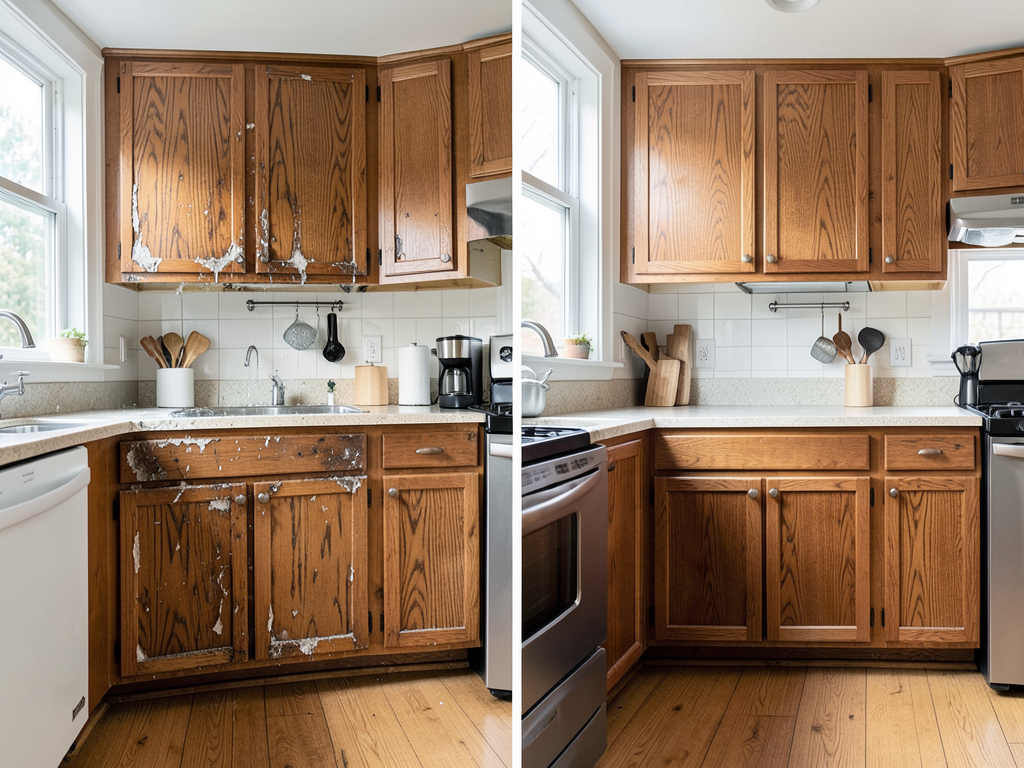
Photo description: Side-by-side comparison showing water-damaged built-in before restoration and fully restored cabinet with matching wood grain and finish. Both images taken in a Washington Heights bungalow kitchen.
Insurance and Documentation
Insurance companies often undervalue custom built-ins. Document everything with detailed photos measurements and material identification. Keep samples of wood finishes and hardware. Most policies cover sudden pipe bursts but exclude gradual leaks or flood damage. Review your policy for “matching coverage” which pays to replace all built-ins if repairs create obvious color or grain mismatches.
Professional restoration companies provide detailed documentation including moisture mapping results drying logs and material safety data sheets. This documentation speeds claim approval and ensures proper valuation.
Preventing Future Damage
Install water leak detectors near plumbing runs. Replace old supply lines every 5-7 years. Insulate pipes in exterior walls to prevent freezing. Consider whole-home water monitoring systems that shut off supply when leaks are detected. Regular HVAC maintenance keeps humidity levels between 30-50% which protects wood from both excessive dryness and moisture.
Washington Heights experiences freeze-thaw cycles that stress older plumbing. Homes built in the 1920s-1940s often have galvanized steel pipes nearing the end of their lifespan. Consider proactive repiping before a catastrophic failure occurs.
Photo description: Technician holding a moisture meter against a built-in cabinet with thermal imaging camera visible in background. Both tools display readings on their screens showing moisture levels in red and blue.
Cost Factors and Timeline
Professional restoration costs vary based on damage extent wood type and finish complexity. Simple surface drying might cost $500-800. Complete restoration including structural repairs and refinishing ranges from $2,500-6,000. Insurance typically covers 70-80% of approved claims after deductible.
Timeline depends on damage severity. Light surface moisture clears in 24-48 hours. Deep saturation requiring structural drying takes 3-5 days. Custom carpentry and finishing adds 1-2 weeks. Emergency response within 1 hour prevents most secondary damage.
Frequently Asked Questions
Can swollen particle board built-ins be saved?
No. Once particle board absorbs water it expands irreversibly. The material loses structural integrity and the laminate surface delaminates. Replacement is the only option.
How long before mold starts growing on wet wood?
Mold can begin growing within 24-48 hours in Milwaukee’s humid climate. The risk increases with temperatures above 70°F and humidity over 60%. Fast professional drying prevents mold establishment.
Should I try to dry built-ins myself?
Light surface moisture can be handled with fans and dehumidifiers. But if moisture readings exceed 15% or you see mold growth call professionals. DIY attempts often cause more damage through rapid uneven drying.
What’s the difference between restoration and replacement?
Restoration preserves original woodwork maintaining historical character and value. Replacement uses new materials that may not match existing built-ins. Restoration costs more upfront but maintains property value and architectural integrity.
Don’t Wait Until It’s Too Late
Every hour counts when water contacts your built-in woodwork. The longer moisture sits the more extensive and expensive the damage becomes. Professional restoration can save your historic cabinetry but only if started quickly.
Call (414) 392-1771 today to schedule your inspection. Our technicians arrive within 60 minutes with industrial drying equipment and moisture mapping technology. We’ll assess the damage document everything for your insurance claim and start the restoration process immediately. Don’t risk losing your irreplaceable built-ins to water damage.
Pick up the phone and call (414) 392-1771 before the next storm hits. Your Washington Heights home deserves expert care from technicians who understand Milwaukee’s unique climate and historic architecture.