
Protecting high-end wine cellars from humidity spikes on the Milwaukee North Shore
Wine collectors on Milwaukee’s North Shore face a unique challenge. The region’s humid summers and freezing winters create conditions that can destroy thousands of dollars in wine collections. A wine cellar requires precise humidity control between 50% and 70% with temperatures around 55°F to preserve tannins and prevent cork degradation. When humidity spikes occur, mold grows on labels and corks, wood shelving warps, and wine quality deteriorates rapidly.
The North Shore’s proximity to Lake Michigan creates microclimates where basements experience condensation on walls and floors. This moisture migrates upward through concrete slabs and foundation walls, creating the perfect environment for humidity spikes. Professional wine cellar restoration experts use specialized equipment to measure moisture content in walls, floors, and air, then implement solutions that protect your investment from Wisconsin’s challenging climate. Professional Mold Remediation for Families in Mequon and Thiensville.
Understanding wine cellar humidity requirements
Wine storage demands specific environmental conditions. Too much humidity causes mold growth on labels and corks, while too little leads to dried-out corks and oxidation. The ideal range sits between 50% and 70% relative humidity with minimal fluctuations.
Temperature directly affects humidity levels. As temperatures rise, air holds more moisture, increasing relative humidity. When temperatures drop suddenly, condensation forms on cooler surfaces. This is why North Shore basements often feel damp during spring thaws when frozen ground releases moisture.
Proper wine cellar construction includes vapor barriers, insulation, and climate control systems designed to maintain stable conditions. Without these elements, seasonal changes cause humidity swings that damage wine collections over time. Water Damage Restoration South Milwaukee.

Technician using hygrometer and infrared thermometer to measure humidity levels in a basement wine cellar
Common humidity problems in North Shore wine cellars
Milwaukee’s North Shore presents specific challenges for wine storage. The area’s heavy clay soil retains moisture, creating hydrostatic pressure against basement walls. This pressure forces water vapor through concrete, raising humidity levels throughout the space. Emergency Water Removal Services for Bay View Homeowners and Business Owners.
Older homes in Whitefish Bay and Shorewood often have stone or brick foundation walls that allow moisture migration. These materials absorb water during wet seasons and release it slowly, causing humidity fluctuations that can last for weeks. Restoring Water Damaged Offices and Lofts in the Historic Third Ward.
Condensation forms when warm, moist air contacts cold surfaces. North Shore basements typically stay cooler than the rest of the home, creating perfect conditions for condensation on wine racks, walls, and floors during summer months.
Plumbing leaks represent another common source of humidity problems. A small drip behind a wall can raise basement humidity levels significantly over time. The moisture feeds mold growth, which releases spores that spread throughout the cellar.
Diagnostic testing for wine cellar moisture issues
Professional moisture assessment begins with visual inspection. Technicians look for water stains, efflorescence on concrete walls, and signs of mold growth. They check wine labels for curling or discoloration, which indicates humidity problems. Signs of Hidden Mold.
Moisture meters measure water content in building materials. A penetrating moisture meter can detect moisture levels up to 1.5 inches deep in wood and drywall. This helps identify hidden leaks behind walls or under flooring.
Thermo-hygrometers measure air temperature and relative humidity. These devices track humidity fluctuations over time, revealing patterns that indicate moisture sources. Some models record data for several days, providing a complete picture of cellar conditions.
Infrared cameras detect temperature differences that indicate moisture presence. Cool spots on walls or floors often correspond to areas with higher moisture content. This technology helps locate leaks without destructive testing.
Professional solutions for wine cellar humidity control
Vapor barriers prevent moisture migration through walls and floors. Polyethylene sheeting with a minimum thickness of 6 mil creates an effective barrier when properly installed. For wine cellars, professionals often recommend 10-mil or thicker material for added durability.
Closed-cell spray foam insulation provides both thermal and moisture protection. This material creates an air seal that prevents humidity migration while adding R-value to basement walls. The foam expands to fill cracks and gaps where moisture might enter.
Dehumidification systems specifically designed for wine cellars maintain consistent humidity levels. These units operate quietly and can be ducted to distribute air evenly throughout the space. Professional-grade models include humidistats that automatically adjust operation based on conditions.
Climate control systems combine cooling and humidity management. Through-the-wall units or split systems provide precise temperature control while integrated dehumidifiers handle moisture removal. These systems often include backup components to prevent failures.
Restoration process for damaged wine cellars
When humidity problems cause damage, restoration follows specific protocols. The process begins with moisture removal using commercial-grade dehumidifiers and air movers. These machines can extract gallons of water from the air and materials each day.. Read more about How to Clean Up After a Commercial Beverage Line Leak in a Milwaukee Bar or Brewery.
Mold remediation becomes necessary when humidity levels remain elevated for extended periods. The IICRC S520 standard governs mold remediation procedures, requiring containment, air filtration, and proper removal techniques to prevent spore spread. IICRC Standards.
Structural drying addresses water-damaged materials. Technicians use moisture meters to track drying progress, ensuring materials return to acceptable moisture content levels before reconstruction begins. This process typically takes 3-5 days depending on conditions.
Content restoration includes cleaning and protecting wine bottles and labels. Specialized cleaning solutions remove mold and mildew without damaging labels or affecting wine quality. Bottles may need to be removed temporarily during restoration work.
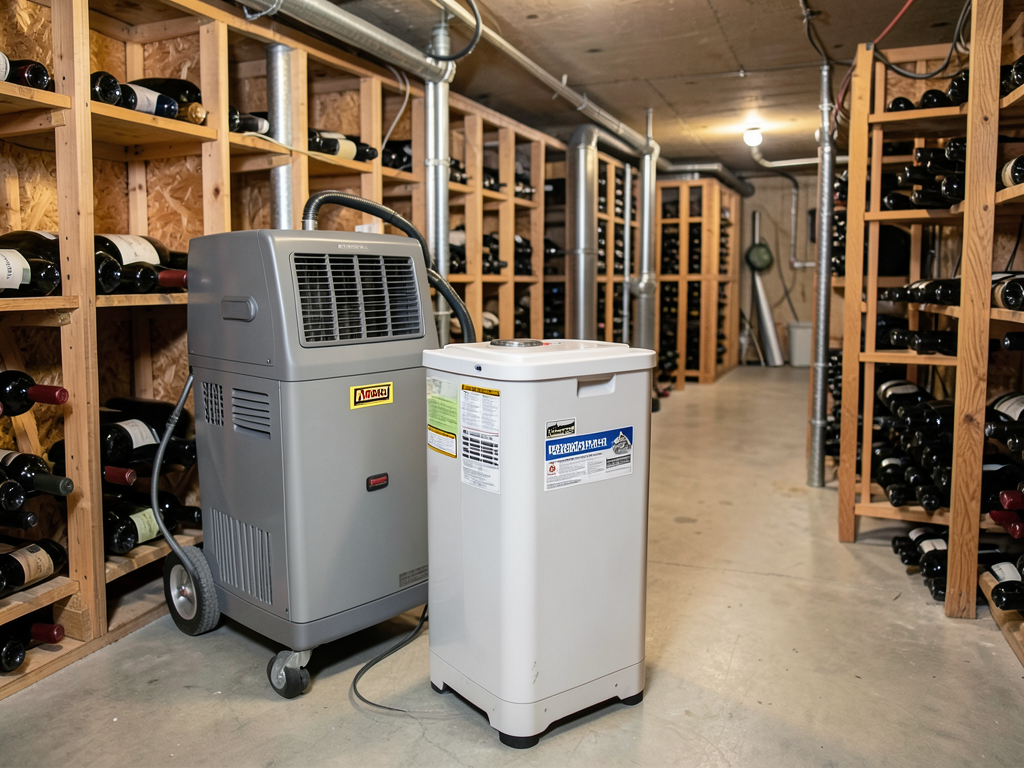
Commercial dehumidifier and air mover setup in a basement wine cellar during moisture remediation
Prevention strategies for long-term protection
Regular monitoring prevents humidity problems from developing. Digital hygrometers with remote sensors allow continuous monitoring of cellar conditions. Some systems send alerts when humidity or temperature moves outside preset ranges.
Maintenance of HVAC and dehumidification equipment ensures proper operation. Filters need replacement every 3-6 months, and condensate drains require cleaning to prevent clogs. Professional maintenance checks identify potential problems before they cause damage.
Foundation waterproofing provides long-term protection against moisture intrusion. Exterior waterproofing membranes, interior drainage systems, and sump pumps work together to keep basements dry. The City of Milwaukee requires specific waterproofing methods for new construction and major renovations.
Proper wine rack construction using moisture-resistant materials prevents warping and mold growth. Stainless steel, sealed wood, or composite materials withstand humid conditions better than untreated lumber. Adequate spacing between bottles allows air circulation.
Local building considerations for North Shore cellars
Milwaukee County’s building codes address moisture control in below-grade spaces. The Wisconsin Uniform Dwelling Code requires vapor barriers in basement walls and proper drainage systems to prevent water accumulation.
Shorewood and Whitefish Bay have specific requirements for basement finishing and wine cellar construction. These municipalities often require permits for electrical work, plumbing modifications, and structural changes to basement spaces.
The region’s freeze-thaw cycles create unique challenges. Water trapped in foundation walls expands when it freezes, causing cracks and allowing more moisture entry. Proper insulation and drainage systems prevent this damage.
Soil conditions affect moisture problems significantly. The heavy clay soil common in the North Shore area retains water, creating hydrostatic pressure against foundation walls. This pressure forces moisture through even small cracks or pores in concrete.
Cost factors for wine cellar restoration
Restoration costs vary based on damage extent and required solutions. Minor humidity problems might require only dehumidifier installation and monitoring, costing $500-$1,500. Major mold remediation and structural repairs can exceed $10,000. EPA Mold Resources.
Insurance coverage depends on the damage cause. Sudden pipe bursts typically receive coverage, while gradual moisture problems often fall under maintenance exclusions. Many homeowners discover too late that their policies don’t cover chronic humidity issues.
Professional assessment fees range from $200-$500 for comprehensive moisture evaluation. This investment helps identify problems early, potentially saving thousands in future restoration costs.
DIY solutions often provide temporary relief but rarely address underlying causes. Store-bought dehumidifiers lack the capacity to handle basement moisture problems effectively. Professional-grade equipment and expertise deliver lasting results.
Case study: Whitefish Bay wine cellar recovery
A Whitefish Bay homeowner discovered mold on wine labels during a summer inspection. Initial testing revealed humidity levels at 78% with temperatures fluctuating between 58°F and 72°F. The 15-year-old cellar had no vapor barrier and relied on a residential dehumidifier.
Moisture mapping identified water vapor migration through foundation walls as the primary source. The homeowner’s collection included bottles valued at over $50,000, making professional restoration essential.
The restoration process involved removing damaged wine racks, installing a 10-mil vapor barrier on walls and floor, adding closed-cell spray foam insulation, and installing a commercial-grade climate control system. The entire project took two weeks and cost $8,200.
Post-restoration monitoring showed humidity stabilized at 62% with minimal fluctuation. The homeowner implemented quarterly professional inspections to maintain optimal conditions.
Before and after comparison of a restored wine cellar showing new vapor barrier installation and climate control equipment
Emergency response for wine cellar humidity crises
Sudden humidity spikes require immediate action to prevent damage. The first step involves removing standing water if present, then deploying commercial dehumidifiers to begin moisture removal.
Wine bottles need assessment for damage. Bottles showing signs of label deterioration or cork issues may require professional evaluation to determine if contents remain viable. Some wines can be recorked if caught early enough.
Electronics and cooling equipment require protection from moisture. Power should be disconnected from any wet equipment to prevent short circuits or further damage.
Professional emergency response teams arrive with specialized equipment designed for wine cellar environments. These teams understand the unique requirements of wine storage and can implement solutions without compromising collection integrity.
Frequently Asked Questions
What humidity level is ideal for wine storage?
The ideal humidity range for wine storage is between 50% and 70% relative humidity. This range prevents cork drying while avoiding mold growth on labels and bottles.
How quickly can humidity damage wine collections?
Humidity above 70% can cause visible damage to labels within 48-72 hours. Prolonged exposure above 75% leads to mold growth, while humidity below 45% begins drying out corks within weeks.
Can I use a regular dehumidifier in my wine cellar?
Residential dehumidifiers lack the capacity and precision needed for wine cellar applications. Professional-grade units include humidistats, operate more quietly, and maintain more consistent humidity levels.
How often should I monitor my wine cellar humidity?
Continuous monitoring is ideal, but checking levels at least weekly helps catch problems early. Digital hygrometers with remote monitoring provide the best protection against humidity spikes.
Does homeowners insurance cover wine cellar humidity damage?
Coverage depends on the cause of humidity problems. Sudden events like pipe bursts are typically covered, while gradual moisture issues often fall under maintenance exclusions.
- Install proper vapor barriers
Apply 10-mil polyethylene sheeting to walls and floors to prevent moisture migration from soil and foundation walls.
- Implement climate control systems
Install commercial-grade cooling and dehumidification equipment with backup systems to maintain stable conditions year-round.
- Monitor conditions continuously
Use digital hygrometers with remote sensors to track humidity and temperature, setting alerts for out-of-range conditions.
- Schedule professional maintenance
Have HVAC and dehumidification equipment serviced quarterly to ensure proper operation and catch potential problems early.
- Address foundation issues promptly
Repair cracks, improve drainage, and consider exterior waterproofing to prevent moisture intrusion from soil and groundwater.
Take action to protect your wine collection
Wine collections represent significant investments that require proper environmental control to maintain value. The Milwaukee North Shore’s challenging climate makes professional humidity management essential for serious collectors.
Don’t wait for humidity problems to damage your collection. Professional assessment can identify potential issues before they cause costly damage. Our technicians understand the unique requirements of wine storage and the specific challenges faced by North Shore homeowners.
Call (414) 392-1771 today to schedule your wine cellar moisture assessment. Our team provides 24/7 emergency response for humidity crises and offers comprehensive restoration services backed by IICRC certification and local building code expertise.
Protect your investment with professional humidity control solutions designed for Milwaukee’s climate. Your wine collection deserves the same care and protection you give to your home’s structure and systems.
{
“@context”: “https://schema.org”,
“@type”: “BlogPosting”,
“headline”: “Protecting high-end wine cellars from humidity spikes on the Milwaukee North Shore”,
“description”: “Expert guide to maintaining optimal humidity in Milwaukee North Shore wine cellars. Learn how to prevent mold and protect your collection from moisture damage.”,
“wordCount”: 1995,
“datePublished”: “2026-05-18T14:55:00.000Z”,
“dateModified”: “2026-05-18T14:55:00.000Z”,
“inLanguage”: “en-US”,
“mainEntityOfPage”: {
“@type”: “WebPage”,
“@id”: “https://allprowaterdamagerestorationmilwaukee.com”
},
“publisher”: {
“@type”: “LocalBusiness”,
“name”: “All Pro Water Damage Restoration Milwaukee”,
“url”: “https://allprowaterdamagerestorationmilwaukee.com”
},
“author”: {
“@type”: “Organization”,
“name”: “All Pro Water Damage Restoration Milwaukee”,
“url”: “https://allprowaterdamagerestorationmilwaukee.com”
},
“image”: {
“@type”: “ImageObject”,
“url”: “https://allprowaterdamagerestorationmilwaukee.com/wp-content/uploads/2026/03/protecting-high-end-wine-cellars-from-humidity-spi-1.png”
}
}
{
“@context”: “https://schema.org”,
“@type”: “LocalBusiness”,
“name”: “All Pro Water Damage Restoration Milwaukee”,
“url”: “https://allprowaterdamagerestorationmilwaukee.com”,
“address”: {
“@type”: “PostalAddress”,
“addressLocality”: “Milwaukee”
},
“areaServed”: {
“@type”: “City”,
“name”: “Milwaukee”
}
}
{
“@context”: “https://schema.org”,
“@type”: “FAQPage”,
“mainEntity”: [
{
“@type”: “Question”,
“name”: “What humidity level is ideal for wine storage?”,
“acceptedAnswer”: {
“@type”: “Answer”,
“text”: “The ideal humidity range for wine storage is between 50% and 70% relative humidity. This range prevents cork drying while avoiding mold growth on labels and bottles.”
}
},
{
“@type”: “Question”,
“name”: “How quickly can humidity damage wine collections?”,
“acceptedAnswer”: {
“@type”: “Answer”,
“text”: “Humidity above 70% can cause visible damage to labels within 48-72 hours. Prolonged exposure above 75% leads to mold growth, while humidity below 45% begins drying out corks within weeks.”
}
},
{
“@type”: “Question”,
“name”: “Can I use a regular dehumidifier in my wine cellar?”,
“acceptedAnswer”: {
“@type”: “Answer”,
“text”: “Residential dehumidifiers lack the capacity and precision needed for wine cellar applications. Professional-grade units include humidistats, operate more quietly, and maintain more consistent humidity levels.”
}
},
{
“@type”: “Question”,
“name”: “How often should I monitor my wine cellar humidity?”,
“acceptedAnswer”: {
“@type”: “Answer”,
“text”: “Continuous monitoring is ideal, but checking levels at least weekly helps catch problems early. Digital hygrometers with remote monitoring provide the best protection against humidity spikes.”
}
},
{
“@type”: “Question”,
“name”: “Does homeowners insurance cover wine cellar humidity damage?”,
“acceptedAnswer”: {
“@type”: “Answer”,
“text”: “Coverage depends on the cause of humidity problems. Sudden events like pipe bursts are typically covered, while gradual moisture issues often fall under maintenance exclusions.”
}
}
]
}
{
“@context”: “https://schema.org”,
“@type”: “HowTo”,
“name”: “How to protect your wine cellar from humidity damage”,
“step”: [
{
“@type”: “HowToStep”,
“position”: 1,
“name”: “Install proper vapor barriers”,
“text”: “Apply 10-mil polyethylene sheeting to walls and floors to prevent moisture migration from soil and foundation walls.”
},
{
“@type”: “HowToStep”,
“position”: 2,
“name”: “Implement climate control systems”,
“text”: “Install commercial-grade cooling and dehumidification equipment with backup systems to maintain stable conditions year-round.”
},
{
“@type”: “HowToStep”,
“position”: 3,
“name”: “Monitor conditions continuously”,
“text”: “Use digital hygrometers with remote sensors to track humidity and temperature, setting alerts for out-of-range conditions.”
},
{
“@type”: “HowToStep”,
“position”: 4,
“name”: “Schedule professional maintenance”,
“text”: “Have HVAC and dehumidification equipment serviced quarterly to ensure proper operation and catch potential problems early.”
},
{
“@type”: “HowToStep”,
“position”: 5,
“name”: “Address foundation issues promptly”,
“text”: “Repair cracks, improve drainage, and consider exterior waterproofing to prevent moisture intrusion from soil and groundwater.”
}
],
“image”: “https://allprowaterdamagerestorationmilwaukee.com/wp-content/uploads/2026/03/protecting-high-end-wine-cellars-from-humidity-spi-1.png”
}
{
“@context”: “https://schema.org”,
“@type”: “BreadcrumbList”,
“itemListElement”: [
{
“@type”: “ListItem”,
“position”: 1,
“name”: “Home”,
“item”: “https://allprowaterdamagerestorationmilwaukee.com”
},
{
“@type”: “ListItem”,
“position”: 2,
“name”: “Blog”,
“item”: “https://allprowaterdamagerestorationmilwaukee.com/blog”
},
{
“@type”: “ListItem”,
“position”: 3,
“name”: “Protecting high-end wine cellars from humidity spikes on the Milwaukee North Shore”
}
]
}
{
“@context”: “https://schema.org”,
“@type”: “Service”,
“serviceType”: “Water Damage Restoration”,
“provider”: {
“@type”: “LocalBusiness”,
“name”: “All Pro Water Damage Restoration Milwaukee”,
“url”: “https://allprowaterdamagerestorationmilwaukee.com”
},
“areaServed”: {
“@type”: “City”,
“name”: “Milwaukee”
},
“description”: “Expert guide to maintaining optimal humidity in Milwaukee North Shore wine cellars. Learn how to prevent mold and protect your collection from moisture damage.”
}